Angular development services for web apps that need structure
Angular development services build and maintain web applications on Angular, Google’s TypeScript framework for large, data-heavy interfaces. Angular includes routing, forms, HTTP handling, and testing tools out of the box, and it enforces consistent patterns across a codebase. It suits organizations building portals, dashboards, and internal systems that several developers will work on for years.
Angular is a framework for applications. It isn’t the right choice for a marketing site, and we’ll tell you if a lighter option fits better.
When Angular is the right choice
Angular’s strengths show up when an application is big, long-lived, or shared across teams. These are the situations where we typically recommend it:
- You’re building a patient, customer, or partner portal with role-based access, many screens, and long forms.
- Your dashboard pulls live data from several sources and needs filters, charts, and tables that stay in sync.
- More than one team, or a mix of in-house and outside developers, will contribute to the same codebase.
- You already run an Angular application that’s several versions behind and getting harder to change.
- Your organization values predictability and long-term maintenance over picking a new library for every problem.
For a small, fast-moving product team, React often gives more flexibility. For content sites, WordPress or Astro are simpler and faster. The decision should come from your team and your roadmap, not habit.
How we approach Angular development
Angular makes many decisions for you, but not all of them. The ones left over are where enterprise applications either stay maintainable or slowly tangle.
Why Angular suits enterprise portals
Portals tend to combine authentication, permissions, many forms, and integrations with systems you don’t control. Angular handles these with built-in pieces: route guards to protect screens by role, interceptors to attach tokens and handle errors in one place, and reactive forms for complex validation. Because every developer uses the same tools, a new team member can find their way around quickly.
Organizing by feature, loading on demand
We organize applications by business feature, such as appointments, billing, or reports, rather than by file type. Each feature loads only when a user opens it, so the first screen stays quick even as the application grows. Modern Angular’s standalone components make these boundaries simpler, and we use them on new builds while working within the module structure of existing apps.
NgRx or services: matching state to complexity
NgRx brings a clear, traceable pattern for shared state, and it’s worth the extra code when many screens read and change the same data. For simpler applications, services with RxJS or signals are easier to read and faster to build. We pick per application, and sometimes per feature, rather than applying NgRx everywhere by default.
Upgrades without a rewrite
An Angular application several major versions behind doesn’t usually need rebuilding. We plan upgrades one major version at a time, update dependencies such as Angular Material alongside the core, and use tests to confirm nothing regresses at each step. That keeps the application in service while it’s modernized.
What an Angular engagement looks like
Our projects follow five stages: Discover, Plan, Design & build, Test & launch, and Support. For an Angular application, discovery maps the users, roles, data sources, and who will maintain the code after launch. Planning produces the feature structure, routing, API contracts, and state approach. On an existing app, we begin with a code review and upgrade assessment before recommending changes.
During the build you work directly with the developers, reviewing working features in short cycles. Components are built to WCAG 2.2 AA, which matters in portals where users complete long forms under time pressure. Before launch we run unit and end-to-end tests, test across devices and browsers, and check performance and security basics.
At handoff you receive:
- The full source code in your repository, following standard Angular conventions and style.
- Documentation covering setup, environments, architecture, and how to add a new feature.
- Automated test suites and a build pipeline your team can run.
- A recommended upgrade path so the application stays on a supported version.
Because the code follows Angular’s own conventions, any experienced Angular developer can pick it up. There’s no lock-in, and we can stay on for ongoing support and new features.
Related work and services
See our Angular work in EHR Portal Development with Angular and DC Analytics: Angular Dashboard for Social Media Engagement Tracking. Angular applications often pair with our back-end development services and UI/UX design services. If you’re comparing frameworks, see React development services and read Angular vs React in 2026.
Why it matters
A codebase built for large teams
Angular's structure and conventions keep a big application consistent across many contributors.
Fewer runtime surprises
TypeScript-first architecture catches errors before they reach production.
Built-in tooling instead of assembled by hand
Routing, forms, and HTTP handling come standard, reducing dependency sprawl.
A framework built for long-term maintenance
Angular's opinionated structure makes it easier for a new developer to onboard onto an existing app.
What's included
The specific work that goes into every engagement.
-
Application architecture & module design
Structured around Angular's module system for maintainability at scale. -
Reactive forms & validation
Robust form handling for data-heavy applications. -
State management (NgRx)
Predictable state for applications with complex, interconnected data. -
API integration
RESTful or GraphQL integration through Angular's HTTP client. -
Testing (unit & e2e)
Jasmine/Karma and Cypress testing set up as part of the build, not an afterthought.
How we deliver this
Discover & scope
Understand the application's data and team structure.
Architect modules & routing
Plan the module system and routing structure.
Build components & services
Develop the application following Angular conventions.
Test (unit & e2e)
Automated testing across unit and end-to-end levels.
Launch & monitor
Go live with monitoring in place.
Tools we use for this work
Questions about this service
Why Angular instead of React?
Angular's opinionated structure suits larger teams and enterprise applications that benefit from built-in conventions; React offers more flexibility for smaller, faster-moving teams. We'll recommend based on your team and project.
Can you maintain or extend an existing Angular application?
Yes — we regularly work within existing Angular codebases rather than requiring a rebuild.
Do you use the latest Angular version?
Yes, and we'll advise on upgrade paths if you're on an older version.
Do you handle state management?
Yes, using NgRx or simpler service-based state depending on your application's actual complexity.
Is Angular a good fit for a small marketing site?
Usually not — Angular is built for applications, not content sites. We'll recommend a lighter option if that's what you actually need.
Other services
Front-End Development Services
Fast, accessible interfaces built with modern front-end code — from a Figma file to a production-ready site.
Learn moreWordPress Development Services
Custom WordPress themes and plugins built for speed, security, and content editors who don't want to fight the…
Learn moreVue.js Development Services
Approachable, high-performance interfaces built in Vue — a lighter-weight alternative when you need interactivity without React or Angular's…
Learn moreThis service in action
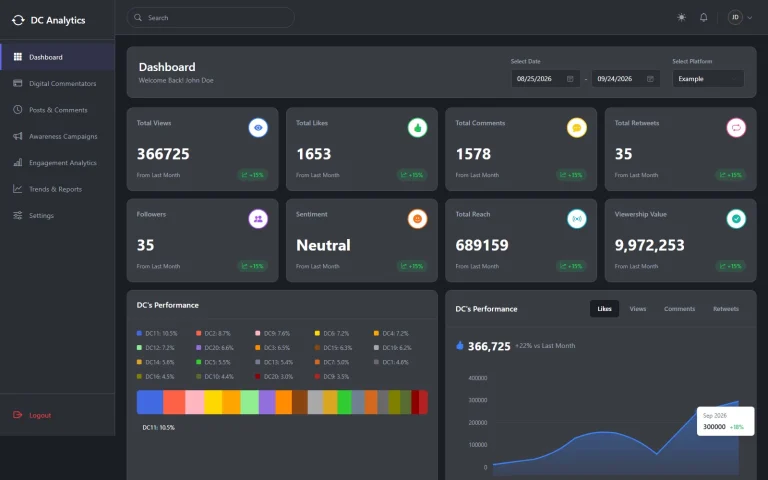
DC Analytics: Angular Dashboard for Social Media Engagement Tracking
DC Analytics tracks how a network of digital commentators performs across social platforms. 99WebSol built the dashboard in…
View case study
EHR Portal Development with Angular
99WebSol built the Angular front end of an electronic health record portal: patient charts, scheduling, tasks, messaging, and…
View case study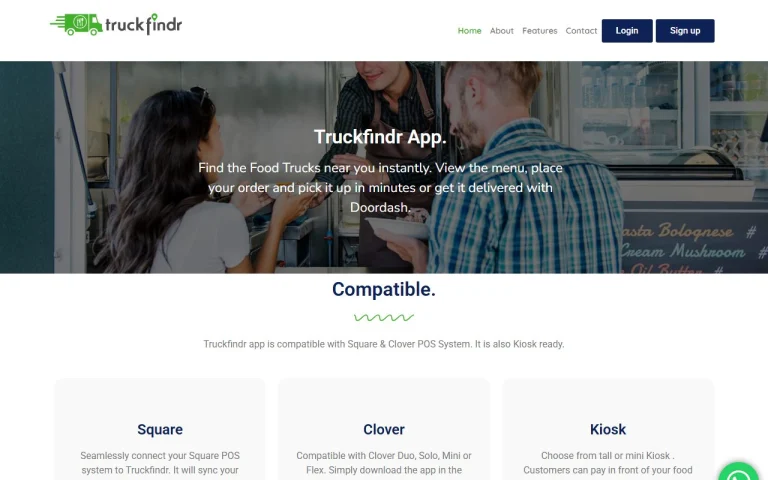
Truckfindr: WordPress Websites & Angular Apps for a Food Truck Ordering Platform
Truckfindr helps food trucks take orders online and helps customers find trucks nearby. 99WebSol has built several WordPress…
View case studyReady to talk about Angular Development Services?
Tell us about your project and we'll follow up with next steps and a straightforward proposal.